This is the official website of Apapa Local Government


History of Apapa
Apapa


The Rich Heritage and Legacy of Apapa
A Historic Maritime Gateway of Nigeria
Apapa Local Government Area (LGA) stands as one of the most historically and economically significant regions in Lagos State, Nigeria. From its modest beginnings as a fishing village to becoming Nigeria’s foremost maritime and commercial hub, Apapa has played a central role in the evolution of Lagos as a global city.

Early Beginnings
A Waterfront Settlement
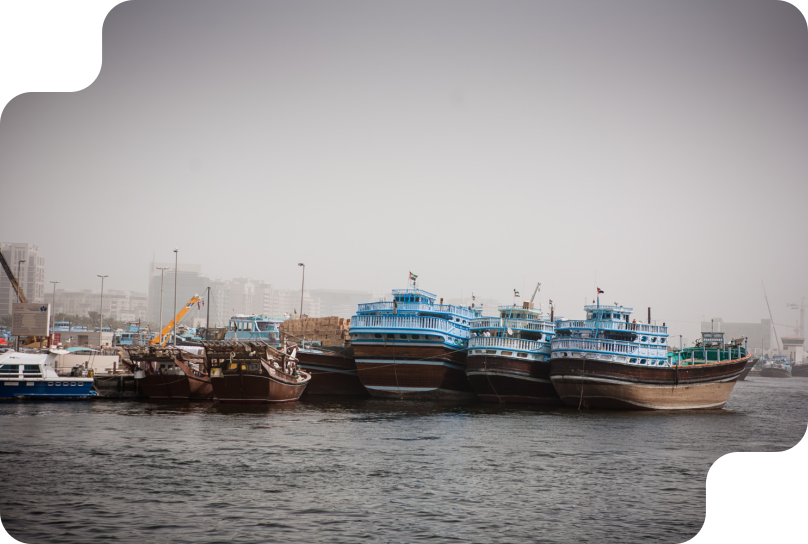
Long before urban development, Apapa was a quiet settlement inhabited by fishermen and traders who relied on its strategic waterfront location for sustenance and commerce. Its proximity to the Atlantic Ocean and Lagos Lagoon naturally made it a center for local trade, drawing merchants and settlers even in pre-colonial times.


Colonial Transformation and Growth
Evolution Of Apapa
During the British colonial era, Apapa’s potential was quickly realized. The colonial administration established ports, warehouses, and railway infrastructure to support the growing shipping and trade industries. Apapa evolved rapidly into a crucial international shipping hub and soon became the commercial heartbeat of Lagos.

The Economic Engine of Apapa
Birth of a Port Powerhouse
The early 20th century marked a significant milestone with the construction of the Apapa Port, laying the foundation for what would become Nigeria’s most vital maritime zone. This development was further expanded with the addition of Tin Can Island Port, positioning Apapa as home to two of Nigeria’s busiest seaports, handling an estimated 75% of the nation’s total import and export volume. Today, these ports serve as lifelines for the Nigerian economy, processing billions of naira worth of goods annually. In just the first quarter of 2023, the Apapa Customs Command generated over ₦212 billion in revenue, underscoring the area's financial significance.

A Legacy of Governance
Formation of Apapa LGA
In 1977, Apapa was officially established as a Local Government Area by the Lagos State Government to decentralize administration and bring governance closer to its residents. As part of its evolution, areas like Apapa Iganmu were later carved out to create additional local development councils.

Driving National Prosperity
Lagos’s Economic Jewel
Situated in Lagos State, one of Africa’s largest economies with a GDP of approximately $259.75 billion (PPP) in 2023, Apapa is at the core of this economic power. Its contributions to trade, logistics, and revenue generation are unmatched, and its historical journey continues to inspire progress, innovation, and community development.

Modern-Day Apapa
Landmarks and Influence
Apapa today is a bustling blend of residential, commercial, and industrial activities. It houses key national and regional landmarks including:
Nigerian Ports Authority (NPA) Headquarters
The NPA Headquarters in Apapa serves as the administrative hub for Nigeria’s port operations, overseeing activities across the country’s major seaports and ensuring efficient maritime trade management.
Tin Can Island Port
One of Nigeria’s busiest and most strategic seaports, Tin Can Island Port handles a large volume of containerized cargo and plays a vital role in supporting the country’s import and export economy.
Eleganza Plaza
Eleganza Plaza is a popular commercial complex known for its mix of retail shops, offices, and wholesale outlets, making it a bustling center for trade and business in the heart of Apapa.
Apapa Amusement Park
A family-friendly recreational spot, Apapa Amusement Park offers fun rides, games, and open spaces, serving as a refreshing getaway for residents and visitors looking for leisure and relaxation.
Royal Heritage
The Kabiyesi's Palace
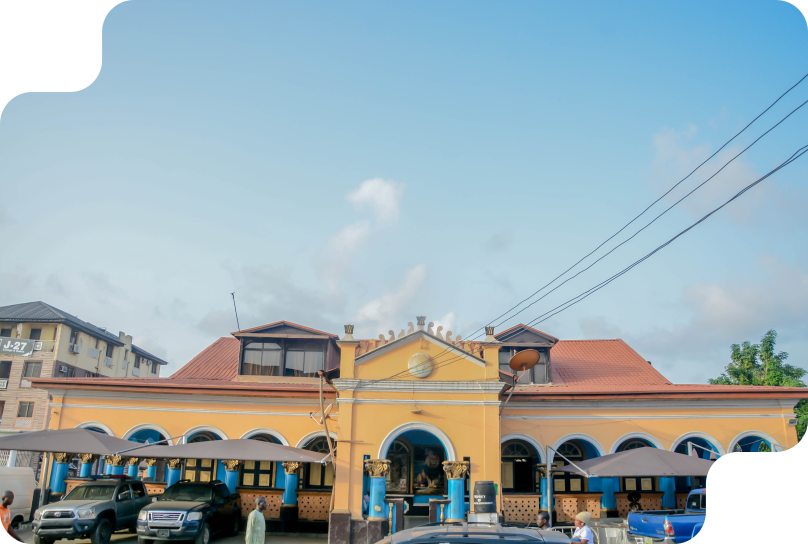
At the heart of Apapa lies the Kabiyesi's Palace — the traditional seat of the community's royal father and one of the area's most treasured landmarks. As the residence and ceremonial home of the Kabiyesi (traditional ruler), the palace stands as a living symbol of Apapa's rich heritage and the spiritual and cultural anchor of its people. For generations, it has been the centre of chieftaincy ceremonies, community deliberations, and festive celebrations, preserving the customs, values, and identity handed down through the ages. Its distinguished architecture and calm surroundings are a proud reminder that, amid Apapa's busy ports and bustling streets, the heartbeat of tradition continues to beat strong. The palace is not just a building — it is the enduring connection between Apapa's past, its people, and the customs that keep the community together.
A Thriving Cultural Mosaic at the Heart of Nigeria’s Port City
Cultural and Community Strength
Apapa is not just a port city; it’s a diverse community filled with resilience and cultural richness. Residents from various ethnic backgrounds live and work together, making Apapa a true microcosm of Nigeria’s unity in diversity.

Overcoming Challenges to Restore Apapa’s Economic Vitality
Challenges and Ongoing Renewal
Despite its prominence, Apapa faces modern challenges such as infrastructure decay, flooding, and traffic gridlock—particularly from port-bound trucks. These issues are not just local inconveniences but national economic threats, with gridlock alone estimated to cost Nigeria up to ₦18 trillion annually. However, efforts from both the government and private sector are underway to revitalize the area, improve infrastructure, and restore Apapa’s glory as Nigeria’s economic engine.